Migraine vs headache: How to tell the difference

October 1, 2026

- Migraines and headaches are not the same thing, though the terms are often used interchangeably.
- “Headache” is an umbrella term for pain in the head. It covers primary headaches (which migraine is a subcategory of) and secondary headaches, which are caused by external factors.
- Tracking your symptoms over time can help you recognize patterns and build a detailed symptom history to share with your doctor.
Many people spend years believing they “just get bad headaches.” Friends, family, and even healthcare professionals may use the terms “headache” and “migraine” interchangeably, making it even harder to understand what’s really going on.
The reality is that migraines and headaches are not the same thing. While headaches can certainly be painful, migraines can be debilitating, making it difficult to get on with daily life.
In this article, we break down the difference between migraine vs. headache, getting into the real definitions so you can better understand your symptoms and feel more confident when speaking to your doctor.
Here’s what you need to know.
Migraine vs. headache: A quick reference
While both migraine and headache can cause mild-to-severe head pain, there are key differences between the conditions. Understanding those differences can help you make sense of your symptoms and know when it’s time to speak to a doctor.
Let’s look at some broad characteristics of both conditions:
{{pro-tip-1}}
What is a headache?
Headache is an umbrella term for a large number of conditions that cause mild or severe pain in the head.
Most people have experienced a headache at some point—an unpleasant, pounding, aching, or sharp pain in the head. It might occur in one area or spread across the head, depending on the type of headache you’re experiencing.
Within the umbrella term of “headache,” there are two major subcategories: primary headaches, which happen on their own, and secondary headaches, which are caused by another medical condition.
Primary headaches
Primary headaches fall into three main categories:
- Tension-type: Tension headaches are the most common type of primary headache. They often involve constant, mild-to-severe pressure on the face, head, or neck, as if a belt is being tightened around the head.
- Trigeminal autonomic cephalalgias (TACs): TACs are a group of rare conditions that cause pain on one side of the head. The most common type is cluster headache, which is a severe type of headache that causes sudden, extremely painful attacks, often at the same time of day or night for multiple days. Pain is often felt behind an eye, peaking after 5–10 minutes and then lasting for a few hours.
- Migraine: Migraine is a type of primary headache disorder, but it often involves symptoms beyond head pain alone.
What is a migraine?
All migraines are headaches, but not all headaches are migraines.
Migraine is a neurological condition characterized by repeated attacks of moderate to severe throbbing or pulsing pain on one side of the head.
Episodes can often be debilitating. Severe head pain, nausea, vomiting, sensitivity to light and sound, and other neurological symptoms can make it difficult to work, drive, socialize, or carry out everyday activities.
Migraines can present differently in every attack, but there are often three or four stages:
- Prodrome: The early signs of a migraine that develop hours or days before the attack. Symptoms include fatigue, difficulty concentrating, and light sensitivity.
- Aura: Neurological symptoms that about 25% of people with migraines experience. They often occur 5–60 minutes before an attack, but they can overlap with the headache phase. Aura symptoms are often visual (flickering or flashing lights, zig-zags, blind spots), but they can also fall under the sensory, motor, or speech/language categories.
- Headache: Moderate to severe throbbing head pain, lasting anywhere from a few hours to multiple days. Nausea, vomiting, and light sensitivity are also common during this phase. In rare cases, people do not experience the headache phase during a migraine.
- Postdrome: The “migraine hangover,” which lasts up to two days. Fatigue, difficulty concentrating, and mood changes are common.
Within the umbrella term of migraine, there are multiple subtypes:
Migraines with aura
Around 1 in 4 people with migraine experience aura symptoms as part of their condition.
Migraine with typical aura causes temporary neurological symptoms just before or during an attack. Visual symptoms are the most common: blind spots, blurry vision, colored spots, flashing lights, or zig-zag patterns. They can also include sensory symptoms, such as numbness or tingling, or speech and language symptoms, such as difficulty speaking or understanding words.
Other types of migraine with aura are defined by specific symptoms:
- Hemiplegic migraine causes temporary weakness on one side of the body during the attack.
- Retinal migraine is rare and causes visual disturbances in one eye.
- Silent migraine involves aura symptoms without a headache.
Other types of migraine
- Chronic migraine involves a minimum of 15 days of headaches each month, with at least eight of those headaches having migraine features. This type of migraine can be very debilitating, making it hard to get on with daily life.
- Hormonal migraine often comes on two days before the period starts and can last until three days into the cycle.
- Vestibular migraine causes vertigo, dizziness, or balance issues during the attack. It is common for people to experience nausea and vomiting during an episode, and for movement or sounds to worsen symptoms.
How is migraine diagnosed?
Many people live with migraines for years thinking they are bad headaches. They don’t realize their symptoms fit a recognized neurological condition.
Getting diagnosed with migraine helps you rule out other conditions, access treatment, and get an understanding of your triggers and symptoms.
Diagnosis isn’t always straightforward. No single blood test or scan can diagnose migraine. Instead, diagnosis is based on your symptoms, how often they occur, how long they last, and whether they fit established diagnostic criteria.
Because migraine symptoms can vary significantly from person to person, doctors often rely on a detailed symptom history. This is why symptom tracking can be so valuable. It helps you give your doctor a clear, accurate record of your symptoms rather than relying on memory alone.
When is it time to get checked out?
Most headaches don’t require medical attention. But if you or someone you love is experiencing head pain that meets any of the following criteria, it’s worth making an appointment with a doctor:
- Moderate to severe
- New, unusual, or different from your typical headaches
- Lasts for multiple days
- Impacts the ability to participate in activities of daily life
- Paired with other symptoms like nausea, vomiting, and light sensitivity
Speak to a doctor if you experience aura symptoms for the first time, if your symptoms change significantly from your usual pattern, or if they don’t fully resolve after the attack has passed.
{{pro-tip-2}}
Tracking your symptoms can help
Migraine diagnosis depends heavily on symptom history. The challenge is that symptoms can vary significantly from attack to attack, and details that feel obvious in the moment can be difficult to remember accurately weeks or months later.
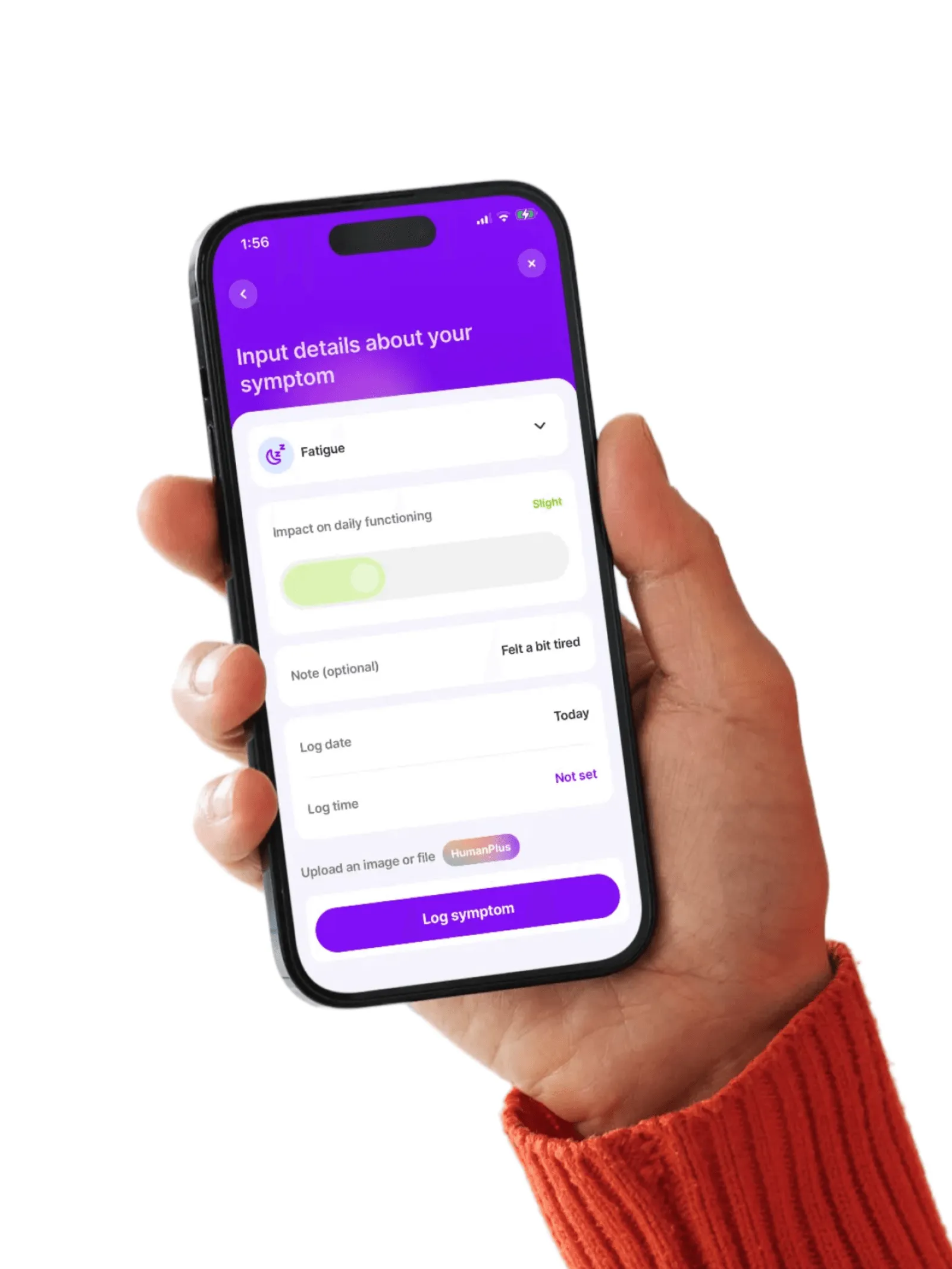
Tracking your symptoms can help you build a clearer picture of what you’re experiencing. This includes the location and severity of head pain, how long symptoms lasted, whether you experienced nausea, light sensitivity, aura symptoms, dizziness, or any other unusual changes.
Using the Human Health app, you can log each episode, including when it started, what it felt like, and what helped, so you can give that concrete information to your doctor. It’s a much more reliable way to understand your health and identify patterns, rather than trying to summarize months or even years of pain in a 10-minute appointment.
{{inline-cta-1}}
Frequently asked questions
Is a migraine just a headache?
No. Migraine is a type of headache disorder, but a migraine attack can involve much more than head pain alone. Symptoms can also include nausea, light sensitivity, dizziness, fatigue, visual disturbances, and difficulty concentrating.
Because migraine involves a wider range of neurological symptoms, some healthcare professionals use the term “migraine attack” rather than “migraine headache”.
Can a headache turn into a migraine attack?
Yes, it is possible for a non-migraine headache to turn into a migraine. Some types of headaches have similar triggers to migraines, so a mild headache can be an early warning sign of a developing migraine episode.
How can you tell the difference between a headache and a migraine?
Migraines often involve symptoms beyond head pain, including nausea, vomiting, sensitivity to light or sound, dizziness, or aura symptoms such as flashing lights and tingling. Headaches can still be painful, but they are less likely to cause these additional neurological symptoms.
Disclaimer: Human Health is a health tracking platform and does not provide medical advice, diagnosis, or treatment. The information in this guide is for educational purposes only and is not a substitute for professional medical care. Always consult your doctor or healthcare provider with questions about your health.
Sources:
- Headache, The National Institute of Neurological Disorders and Stroke
- Muscle contraction tension headache (2024)
- Trigeminal autonomic cephalalgias, The International Classification of Headache Disorders
- Migraine, The National Institute of Neurological Disorders and Stroke
- Migraine with aura (2024)
- Types of migraines, The Migraine Trust
- Migraine, The International Classification of Headache Disorders
- Why Don’t We Use the Terms “Migraines,” “Migraine Headaches” and “Migraineur?”, American Migraine Foundation
- Migraine headache (2024)
This is a div block with a Webflow interaction that will be triggered when the heading is in the view.

Learn more

Migraine with aura: What it is and what it feels like


Hemiplegic migraine: When migraine mimics a stroke

Migraine symptoms: What an attack feels like
Vestibular migraine: When migraine causes dizziness
Silent migraine: Aura without the headache
Pair testing with tracking
If you're starting to wonder whether what you're getting is more than a headache, write down what each one feels like as it happens. A few weeks of notes is more useful than trying to remember on the day.


Pro tip
Symptoms of headache and migraine can overlap and vary. Diligently tracking your symptoms, including their duration, frequency, and severity, can help you and your doctor understand what’s actually going on.
Pro tip
Symptoms such as visual disturbances, speech difficulties, numbness, tingling, or one-sided weakness can occur as part of migraine aura, but they can also occur with other neurological conditions. An accurate diagnosis is important.
.png)


