Inside the Human Health endometriosis dataset

October 20, 2026
Much of the experience of endometriosis happens outside the clinic. Symptoms can change over time and can be difficult to capture during occasional appointments [1, 2]. Reported time to diagnosis for endometriosis ranges from 5 to 12 years from symptom onset [4]. That leaves a significant part of people's experience undocumented before a diagnosis is made. Capturing symptoms as they happen, between appointments, can help build a picture of the patient experience that can otherwise be difficult to study.
Endometriosis is a painful, chronic inflammatory disease affecting almost 200 million people worldwide [1, 2]. It is associated with chronic pelvic pain, fatigue, gastrointestinal symptoms, infertility and reduced quality of life, as well as substantial impacts on work and healthcare use [1, 2].
Despite its prevalence and impact, endometriosis remains significantly under researched and has been identified as a major contributor to the global gender health gap [3].
This makes understanding what people actually experience with endometriosis, particularly outside the clinic, extremely important.
Why endometriosis data captured outside the clinic is important
Because people use Human to track symptoms, treatments and other health conditions together and over time, the data provides a rich picture of the true experience of endometriosis. Data in Human Health captures different parts of a person's health together and, for people who track over months, how they change over time.
Tracking is also not limited to a predefined set of endometriosis outcomes. What people choose to record can surface symptoms and experiences that they themselves consider important, including areas that may not be prioritized by predefined measures.
The data collected in Human Health can surface patterns that can be used to identify priority research areas.
Who is represented in the data?
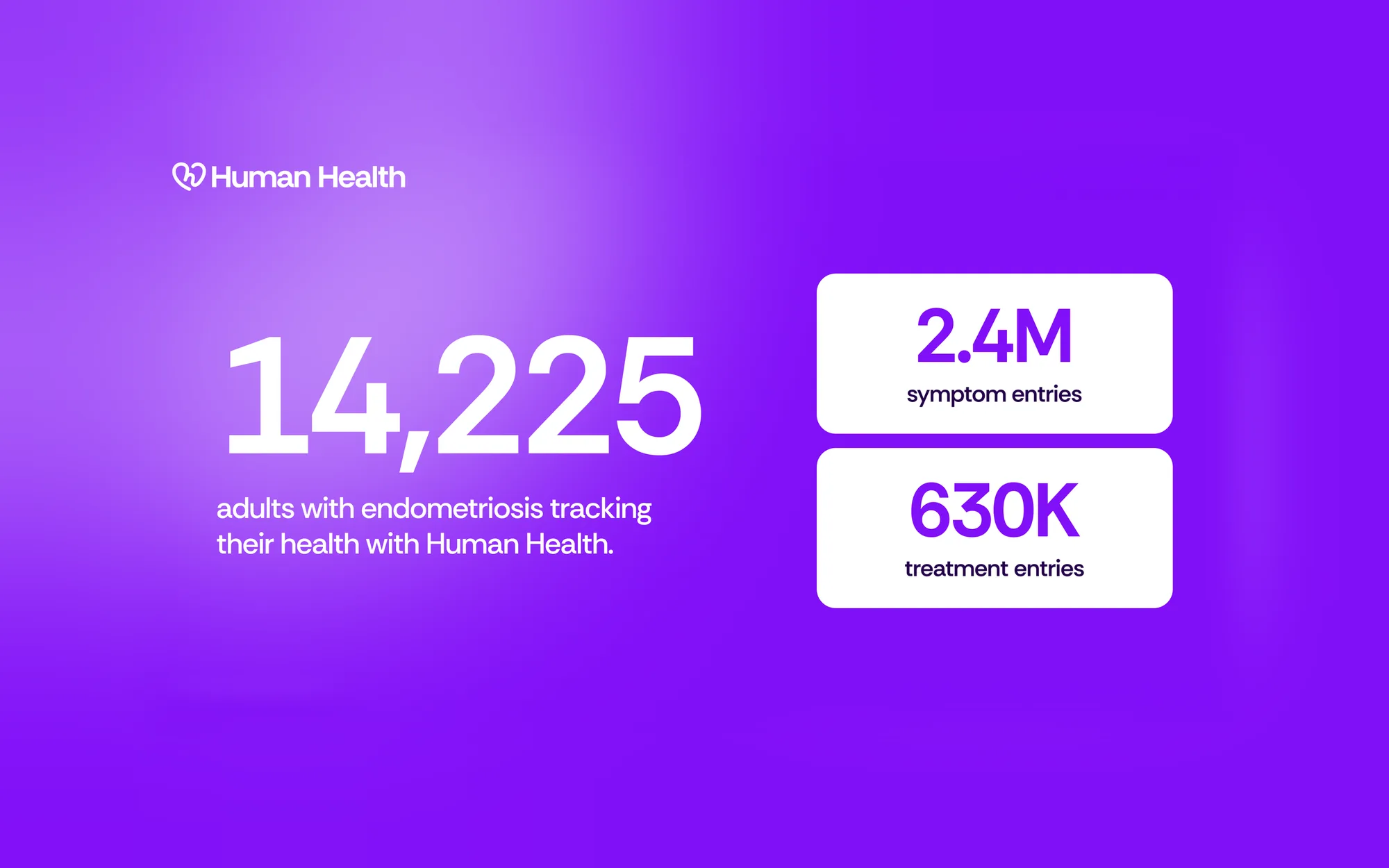
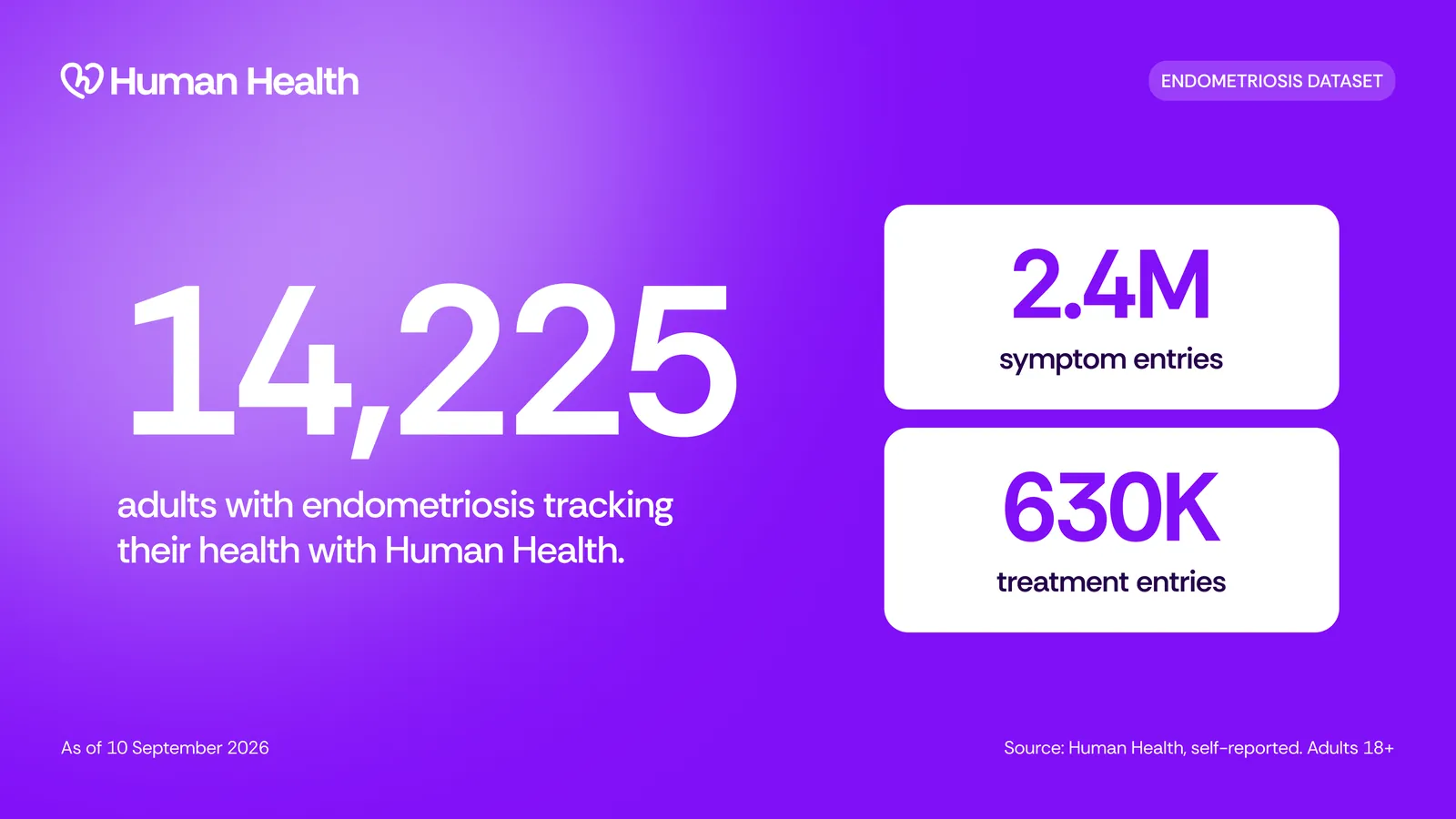
14,225 adults have added endometriosis to their Human Health profile, logging 2,414,155 symptom entries and 631,732 treatment entries.
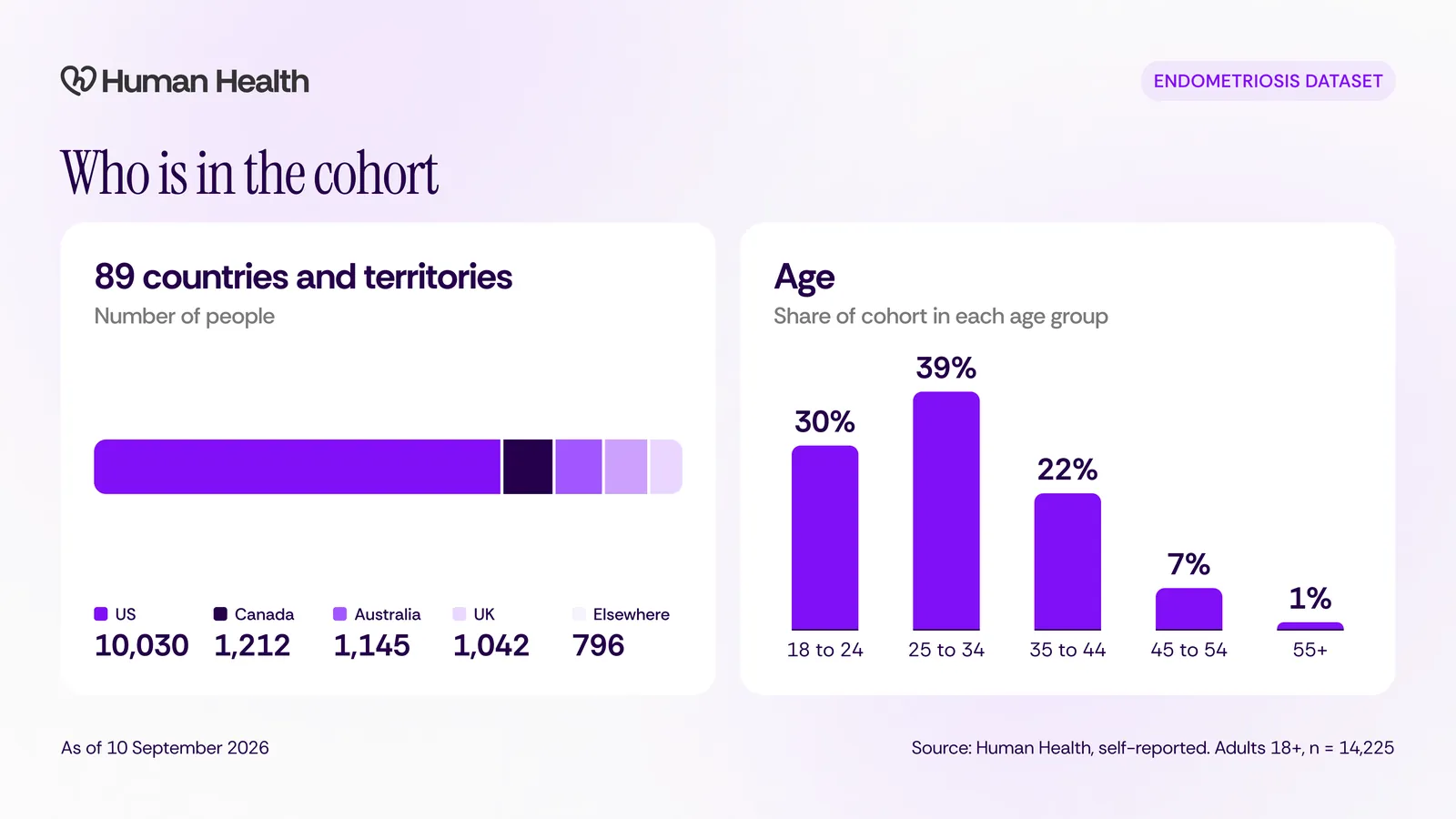
The cohort spans 89 countries and territories. The largest cohorts are in the United States (10,030), Canada (1,212), Australia (1,145) and the United Kingdom (1,042).
92.1% are aged 18 to 44. The largest age group is 25 to 34 (39.2%), followed by 18 to 24 (30.3%) and 35 to 44 (22.5%).
This cohort represents people who independently use Human Health to record their health, rather than participants recruited into a predefined study.
1,490 people have tracked for more than three months, and 404 for more than a year.
What the data has captured
What symptoms do people with endometriosis track?
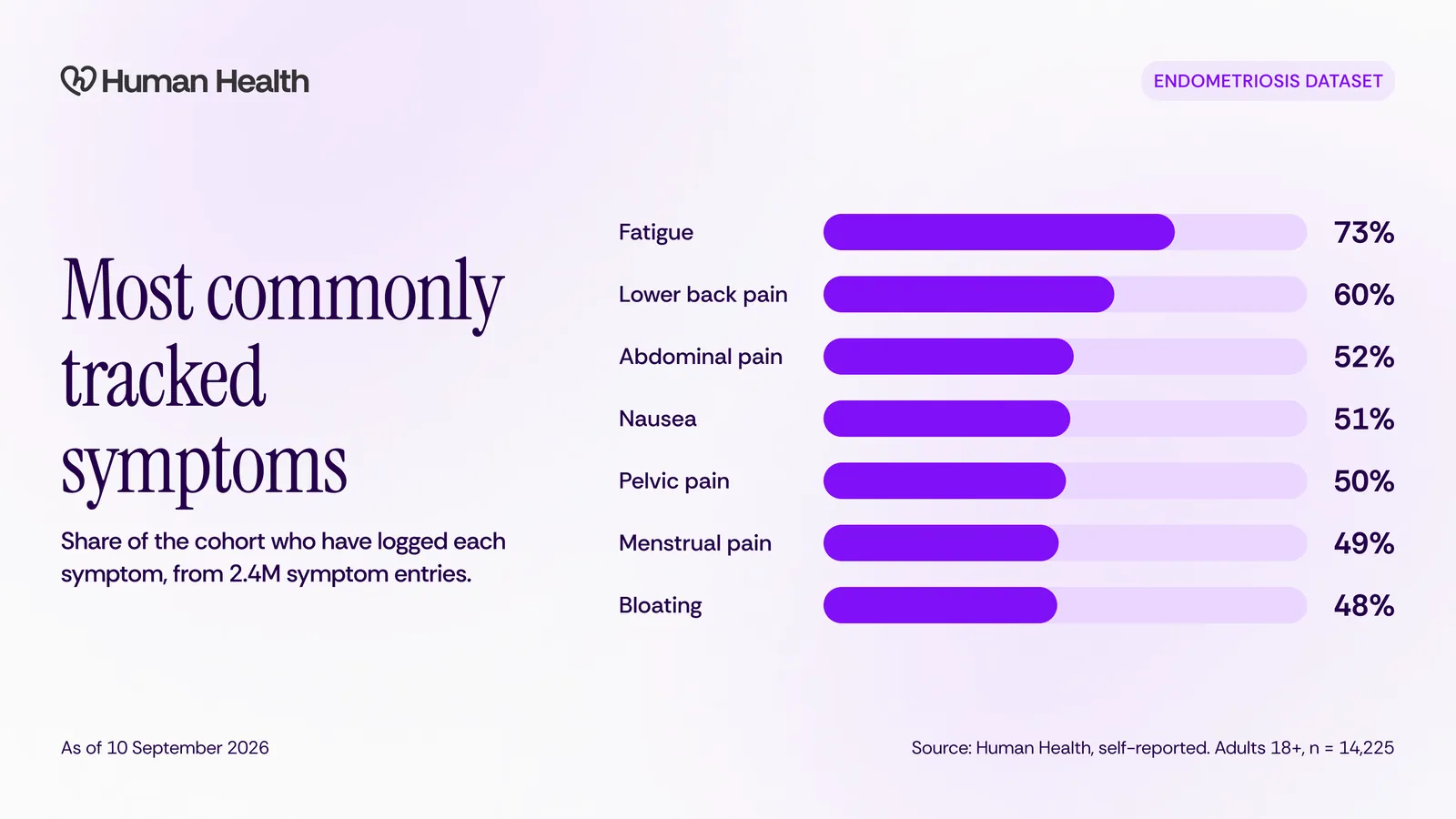
People with endometriosis in Human Health have logged 2,414,155 symptom entries across 2,457 distinct symptoms between 23 May 2023 and 10 September 2026. The most commonly logged symptoms, as a share of the cohort, are fatigue (72.5%), lower back pain (60.1%), abdominal pain (51.6%), nausea (51.0%), pelvic pain (50.0%), menstrual pain (48.6%) and bloating (48.3%). Pelvic pain is tracked by 52% to 58% of people under 45, compared with 39% of those aged 45 to 54 and 31% of those aged 55 and over.
What treatments do people with endometriosis track?
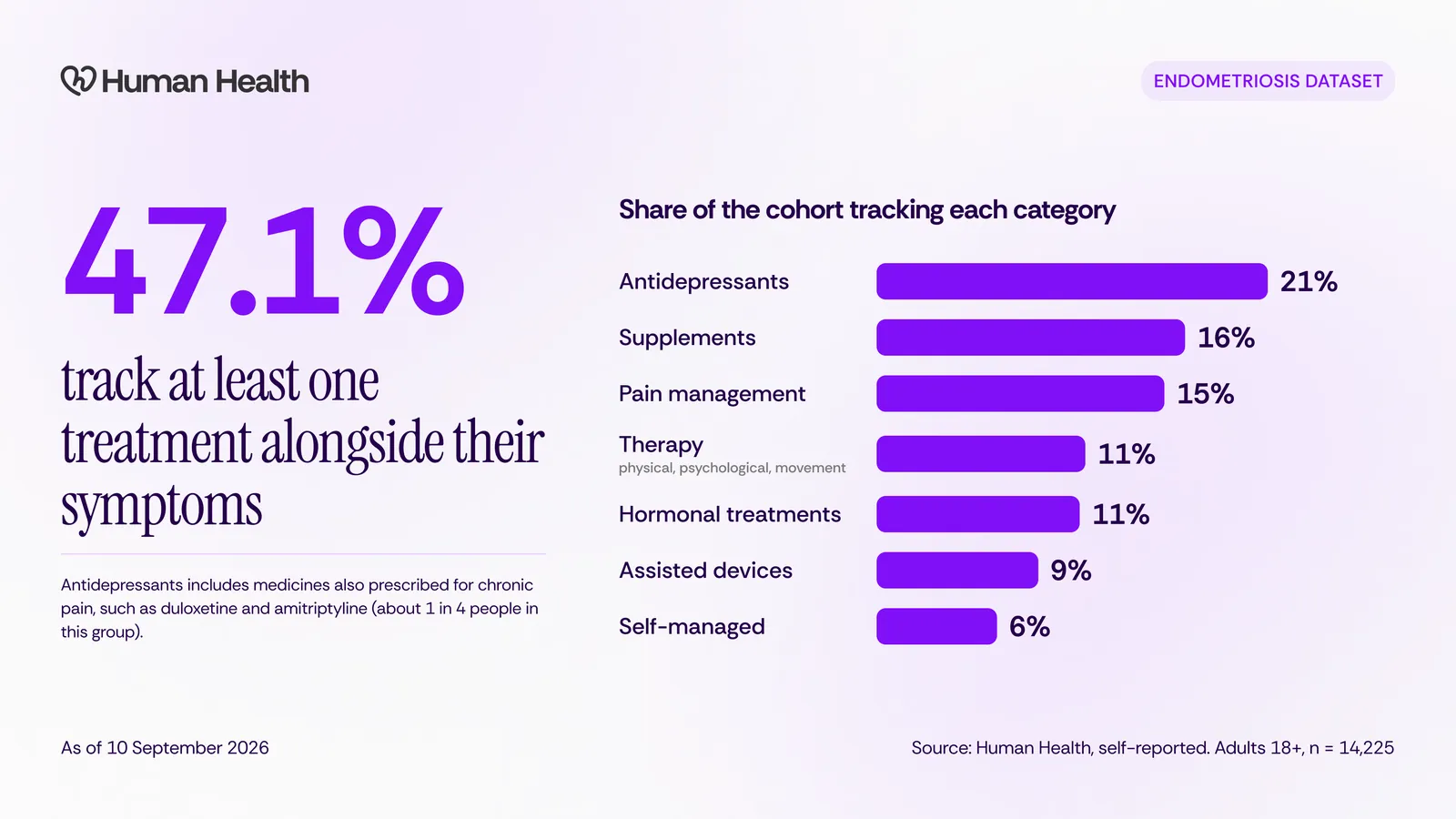
People with endometriosis in Human Health track prescribed medicines and self-managed treatments together. 47.1% of the cohort track at least one active treatment alongside their symptoms. The most commonly tracked treatment categories, as a share of the cohort, are antidepressants (20.7%), supplements (16.2%), pain management (15.2%), therapy including physical, psychological and movement-based therapies (10.9%), hormonal treatments (10.7%), assisted devices (8.4%) and self-managed treatments (6.3%). Antidepressants includes medicines also prescribed for chronic pain, such as duloxetine and amitriptyline, tracked by about 1 in 4 people in this group.
What other conditions do people with endometriosis track?
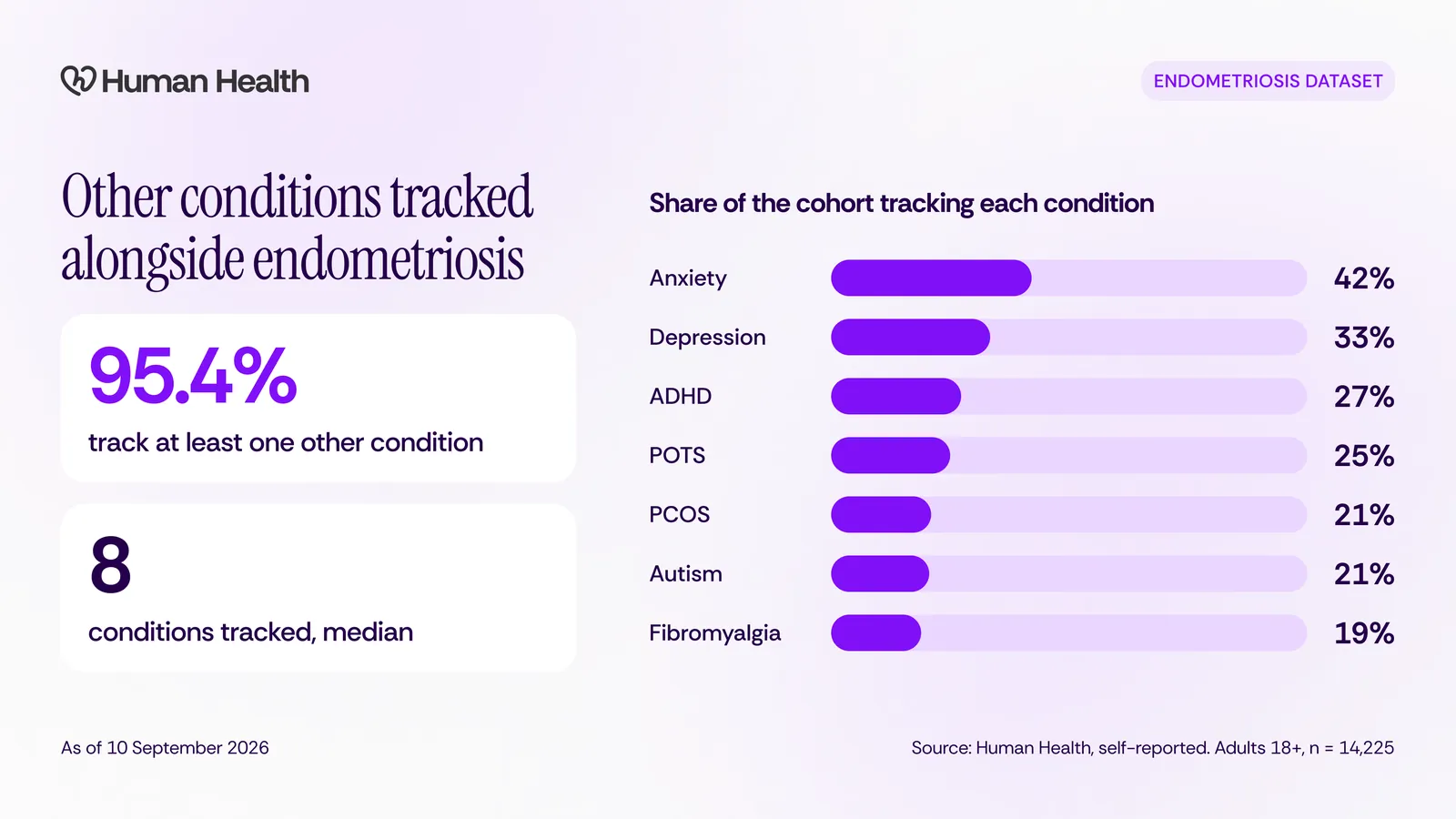
95.4% of people with endometriosis in Human Health track at least one other condition alongside it, and the typical person tracks 8 conditions in total. The most commonly tracked are anxiety (42.0%), depression (33.3%), ADHD (27.2%), POTS (24.9%), PCOS (20.9%), autism (20.6%) and fibromyalgia (18.8%).
Notes on methods and limitations
Human Health is a symptom and health tracking app for iOS and Android. People choose what to track and record entries when it suits them. This cohort is all adults (aged 18 and over) who had added endometriosis to their profile as of 10 September 2026. Figures are aggregated and de-identified. How data is collected, used and shared is set out in our privacy policy. The data is described as recorded, not interpreted.
These findings are descriptive and based on self-reported data rather than a predefined research protocol. Human Health does not capture whether or how endometriosis was diagnosed, diagnoses have not been clinically verified, and tracking frequency varies between people. About half of people who logged symptoms did so on a single day.
The people represented are digitally self-selected and 70.5% are based in the United States. They may also be more engaged in self monitoring of their health than the wider population of people with endometriosis. This limits how far these findings can be generalized.
Researchers who want the underlying definitions or further detail can request them through Research partnerships.
Turning patterns into research
By logging their endometriosis symptoms, people using Human Health are helping bring light to an understudied disease. Their records create valuable contemporaneous data about what people with endometriosis experience, including the symptoms, treatments and experiences that happen between clinic visits, which traditional research often misses.
The data collected in Human Health can surface patterns that help identify priority research areas. Human Health can then build on these signals through structured research with people already engaged in tracking their health.
Cite this page
Suggested citation
Human Health. Inside the Human Health endometriosis dataset. 2026. Available at: https://www.human.health/blog/endometriosis-dataset. Accessed [date].
Figures you can quote
- As of 10 September 2026, 14,225 adults had added endometriosis to their Human Health profile, logging 2,414,155 symptom entries and 631,732 treatment entries.
- The cohort spans 89 countries and territories. 92.1% are aged 18 to 44, with the largest group aged 25 to 34 (39.2%).
- The five most commonly logged symptoms are fatigue (72.5%), lower back pain (60.1%), abdominal pain (51.6%), nausea (51.0%) and pelvic pain (50.0%), across 2,414,155 symptom entries.
- 95.4% of the cohort track at least one other condition alongside endometriosis, and the typical person tracks 8.
- Pelvic pain is tracked by 52% to 58% of people under 45, compared with 39% of those aged 45 to 54 and 31% of those aged 55 and over.
Data requests
References
- Zondervan, K.T., C.M. Becker, and S.A. Missmer, Endometriosis. N Engl J Med, 2020. 382(13): p. 1244–1256.
- As-Sanie, S., et al., Endometriosis: A Review. JAMA, 2025. 334(1): p. 64–78.
- McKinsey Health Institute and World Economic Forum, Closing the Women's Health Gap. 2024.
- De Corte, P., et al., Time to Diagnose Endometriosis: Current Status, Challenges and Regional Characteristics: A Systematic Literature Review. BJOG, 2025. 132(2): p. 118–130.
This is a div block with a Webflow interaction that will be triggered when the heading is in the view.

Learn more


Human Health goes to INSAR

Validation of our Symptom Measure: White Paper

Research Roadmap: How and Why We Do Research




