PMOS diet: What the research shows and why tracking your experience matters

November 27, 2026

- Polyendocrine metabolic ovarian syndrome (PMOS), formerly PCOS, is a hormonal and metabolic condition that affects people who menstruate.
- There is no universally recommended “PMOS diet.” Healthy eating is an important part of PMOS management, but research has not found one diet that works best for everyone.
- Dietary changes should be sustainable and tailored to your individual needs and preferences. Tracking your diet alongside your symptoms can help you record your experience and give you useful information to discuss with your healthcare provider.
If you or someone you love has polyendocrine metabolic ovarian syndrome (PMOS), you’ve likely heard of the “PMOS diet.”
Living with PMOS can be challenging and frustrating, especially when specific diets and supplements are touted as cures.
While no specific diet can cure PMOS, healthy eating is an important part of managing the condition. The confusing part is that current research hasn’t found one particular diet or way of eating that works best for everyone.
In this article, we look at what the research actually says about diet and PMOS, from specific dietary approaches to foods and supplements.
Polycystic ovary syndrome (PCOS) was officially renamed polyendocrine metabolic ovarian syndrome (PMOS) in May 2026. Find out more in our article about the name change.
The PMOS diet: What the research tells us
Healthy eating is generally recommended to people with PMOS as it can support general and metabolic health, body composition, and quality of life. A 2026 review of 34 studies found that lifestyle interventions, including dietary changes, may improve blood sugar regulation and menstrual regularity in people with PMOS.
Healthy eating can also play a role in weight management, which may mean maintaining your current weight, preventing weight gain, or losing weight, depending on your needs and goals.
Importantly, though, the benefits of a healthy lifestyle aren’t dependent on weight loss, and weight loss isn’t an appropriate goal for everyone.
This is where things can get confusing. If you’ve been told that changing your diet can help manage PMOS, you may understandably wonder whether there’s a particular diet you should follow, or certain foods you should eat or avoid. Search online, and you’ll find no shortage of restrictive diets, lists of foods to cut out, supplements, and claims about the “best” way to eat for PMOS.
The answer isn’t that straightforward.
Research has yet to find a diet that is better for people with PMOS than any other. Because of this, you should try to focus on making adjustments that are sustainable, tailored to your needs, and non-restrictive.
Below, we explore some recent research about diet and PMOS, including what different dietary approaches may offer and where the evidence remains uncertain.
{{pro-tip-1}}
Dietary approaches studied for PMOS
Low-carbohydrate diet
Some research suggests that eating a low-carbohydrate diet may improve metabolic health in people with PMOS, including insulin resistance.
One 12-week study found improvements in insulin resistance, menstrual cycle regularity, hormone levels, and body weight among participants following a low-carbohydrate Mediterranean diet.
However, because the study combined carbohydrate restriction with Mediterranean-style eating, it can’t tell us whether reducing carbohydrates specifically was responsible for these improvements. Mediterranean-style diets may also help reduce inflammation, which is relevant because PMOS is associated with chronic low-grade inflammation.
More research is needed to fully understand how reducing carbs can help manage PMOS.
If you’re curious about trying a Mediterranean diet, it commonly includes:
- Plant-based meals, with small portions of lean meats
- Fruits and vegetables
- Whole grains
- Nuts and legumes
- Olive oil
- Fish and seafood
{{pro-tip-2}}
High-protein diet
Protein forms part of a balanced, healthy diet. It can come from a range of foods, including:
- Lean meats and poultry
- Seafood
- Dairy products
- Eggs
- Legumes, tofu, and lentils
A 2024 review found that high-protein diets may improve insulin resistance in people with PMOS compared with balanced diets, although larger studies are needed to confirm these findings.
Whey protein is also being studied in PMOS, with early research suggesting it may influence insulin response, although more research is needed.
Fiber
A 2025 review found some promising possible connections between eating a diet high in fiber and positive metabolic outcomes for people with PMOS. However, the exact connection between dietary fiber and PMOS is not well known and requires more research.
The following foods are great sources of fiber:
- Whole fruits and vegetables
- Pumpkin and sunflower seeds
- Chickpeas, beans, and lentils
- Flaxseed
- Steel-cut oats
- Whole-grain rice
Do you need to avoid certain foods with PMOS?
If you search online for foods to avoid with PMOS, you may come across recommendations to cut out particular foods or entire food groups.
However, there is no specific list of foods that everyone with PMOS needs to avoid.
Current guidelines recommend a healthy, sustainable diet tailored to your individual needs and preferences, and advise against unnecessarily restrictive or nutritionally unbalanced diets. You may notice that certain foods affect how you feel, but this doesn’t necessarily mean there’s a link.
What about “inflammatory” foods?
PMOS is associated with inflammation, and some researchers have looked at whether dietary habits might play a role.
A 2026 meta-analysis found that people with PMOS tended to have slightly more pro-inflammatory dietary patterns than those without PMOS. However, the difference was small, and the research cannot tell us whether these dietary patterns contribute to PMOS or are simply associated with it.
Importantly, this doesn’t mean there is a specific list of “inflammatory foods” that everyone with PMOS needs to avoid.
Current evidence supports focusing on an overall healthy eating pattern rather than cutting out individual foods or food groups.
What about dairy?
Some people find that cutting out dairy can help with PMOS, but the evidence isn’t clear enough to recommend that everyone with the condition avoids it.
A 2024 review and meta-analysis found mixed results. While some people saw improvements after following diets lower in dairy, these diets also reduced starch, so researchers couldn’t tell what role dairy played.
A 2025 review reached a similar conclusion: there are theories about how dairy could affect the hormonal and metabolic features of PMOS, but we don’t yet know whether cutting it out makes a difference.
Supplements and PMOS
You may have heard that taking vitamin supplements, like vitamin D, vitamin E, inositol, magnesium, omega-3 fatty acids, zinc, chromium, and selenium, can help manage PMOS symptoms.
Based on current research, there isn’t enough evidence to suggest that everyone with PMOS should increase their intake of particular vitamins or minerals, or take specific supplements, to manage PMOS.
However, PMOS research is always evolving, and it’s best to speak to your doctor about what’s best for you and your condition.
Important note: Check with your doctor before starting a new supplement, as some can cause side effects or interact with medications you're taking.
Vitamin D
Research finds that vitamin D deficiency is common among people with PMOS, and may be associated with metabolic health effects.
A 2026 review found that taking vitamin D may have a positive impact on insulin resistance, though results can vary and more research is needed to better understand the connection.
Vitamin D can be increased through your diet, not just through sun exposure. Examples of foods high in vitamin D include:
- Cod liver oil
- Salmon and trout
- Mushrooms
- Fortified milk
- Soy, almond, and oat milk
- Eggs
Inositol
A supplement often recommended to people with PMOS is inositol. It is commonly taken as capsules or as a powder dissolved in water.
Research shows that taking inositol supplements may improve insulin resistance and other aspects of metabolic health in people with PMOS, though more research is needed to validate these claims.
Other supplements studied for PMOS
Multiple other supplements have been studied for their potential impacts on PMOS. Let’s look at what the research tells us so far:
| Supplement | Research findings | What we still don’t know |
|---|---|---|
| Omega-3 fatty acids | Some studies have found improvements in insulin resistance, cholesterol and other blood fats, and inflammation. | More research is needed to understand how beneficial omega-3 supplementation is for people with PMOS. |
| Vitamin E | Some research suggests potential benefits for insulin resistance and blood fat levels. | The evidence is still limited. |
| Zinc | Some studies have found improvements in insulin resistance, blood fat levels, inflammation, and oxidative stress. | Zinc has often been studied alongside other supplements, so it’s difficult to know how much of the effect is due to zinc itself. |
| Magnesium | People with PMOS may be more likely to have low magnesium levels or not get enough through their diet. | Studies looking at whether magnesium supplements improve insulin resistance have had inconsistent results. |
| Selenium | Some research suggests selenium may help the body protect itself against oxidative stress. | A 2023 review found no significant benefits for insulin resistance, blood sugar, blood fats, testosterone, or weight. |
| Chromium | Some studies have found improvements in insulin resistance and blood sugar control. | Results have been inconsistent, and other studies have found no significant benefits. |
As you can see, some supplements have shown promising results, but the evidence is still limited or inconsistent.
A 2026 review also found insufficient reliable evidence of short-term metabolic benefits from the supplements it examined.
This means we can’t yet say for certain which supplements are likely to help with PMOS symptoms, or who might benefit from taking them.
There’s no one-size-fits-all diet for PMOS
There’s no specific “PMOS diet” that everyone with PMOS should follow to see benefits.
While healthy eating is an important part of managing PMOS, current research doesn’t support one particular diet over another. Understandably, that can make knowing what to change about your diet feel confusing.
However, we know that living with PMOS is an individual experience. Some people find that making alterations to their diet can have a positive impact on their symptoms and quality of life. What feels right to your body is worth listening to, even when research can’t give you a clear answer.
Using the Human Health app, you can track specific dietary approaches, such as a Mediterranean or dairy-free diet, alongside your symptoms. You can also use journal entries to record more detailed information about what you eat when it feels useful.
{{inline-cta-1}}
Frequently asked questions
What is the PMOS diet?
There is no single “PMOS diet” that everyone with the condition is recommended to follow. Current guidelines recommend healthy eating as part of managing PMOS but don’t support one particular type of diet over another.
The best approach is a diet that’s balanced, sustainable, and tailored to your individual needs and preferences.
Should I avoid certain foods with PMOS?
You may notice that certain foods affect how you feel, and tracking your food and symptoms can help you record your own experiences. However, there is no specific list of foods that everyone with PMOS needs to avoid.
Can changing my diet cure my PMOS?
No. There is currently no cure for PMOS, and changing your diet won’t make the condition go away.
However, healthy eating is an important part of managing PMOS and may help improve some aspects of your health and symptoms.
Disclaimer: Human Health is a health tracking platform and does not provide medical advice, diagnosis, or treatment. The information in this guide is intended to support, not replace, conversations with qualified healthcare professionals.
Sources:
- Polyendocrine metabolic ovarian syndrome, the new name for polycystic ovary syndrome: a multistep global consensus process (2026)
- Recommendations From the 2023 International Evidence-based Guideline for the Assessment and Management of Polycystic Ovary Syndrome (2023)
- The effect of lifestyle interventions in women with polyendocrine metabolic ovarian syndrome: A systematic review and meta-analysis (2026)
- Nutritional and herbal interventions for polycystic ovary syndrome (PCOS): a comprehensive review of dietary approaches, macronutrient impact, and herbal medicine in management (2025)
- Mediterranean Diet Combined With a Low-Carbohydrate Dietary Pattern in the Treatment of Overweight Polycystic Ovary Syndrome Patients (2022)
- Mediterranean diet, MedlinePlus
- Effects of high-protein diets on the cardiometabolic factors and reproductive hormones of women with polycystic ovary syndrome: a systematic review and meta-analysis (2024)
- Impact of dietary fiber on PCOS: a systematic review (2025)
- High-fiber foods, The National Cancer Institute
- The Role of Chronic Inflammation in Polycystic Ovarian Syndrome—A Systematic Review and Meta-Analysis (2021)
- Association between dietary inflammatory index and polycystic ovary syndrome: a meta-analysis of case-control studies (2026)
- Dairy consumption and its association with anthropometric measurements, blood glucose status, insulin levels, and testosterone levels in women with polycystic ovary syndrome: a comprehensive systematic review and meta-analysis (2024)
- Dairy Consumption and Its Impact on PCOS and the Reproductive System: The Connection (2025)
- The Association Between Vitamin D and Polycystic Ovary Syndrome (PCOS) in Women: A Systematic Review (2026)
- Vitamin D, The National Institutes of Health Office of Dietary Supplements
- Inositol for Polycystic Ovary Syndrome: A Systematic Review and Meta-analysis to Inform the 2023 Update of the International Evidence-based PCOS Guidelines (2024)
- Effects of selenium supplementation on Polycystic Ovarian Syndrome: a systematic review and meta-analysis on randomized clinical trials (2023)
- Nutritional and Related Interventions for Metabolic Markers in Polycystic Ovary Syndrome: A Systematic Review and Exploratory Meta-Analysis (2026)
This is a div block with a Webflow interaction that will be triggered when the heading is in the view.

Learn more

PCOS’s new name: What the change to PMOS means


How to test for PMOS: Understanding the diagnostic process

PMOS hair loss: Why it happens and what you can do about it

PMOS facial hair: Understanding hirsutism and your treatment options

PMOS acne: How to recognize and manage it
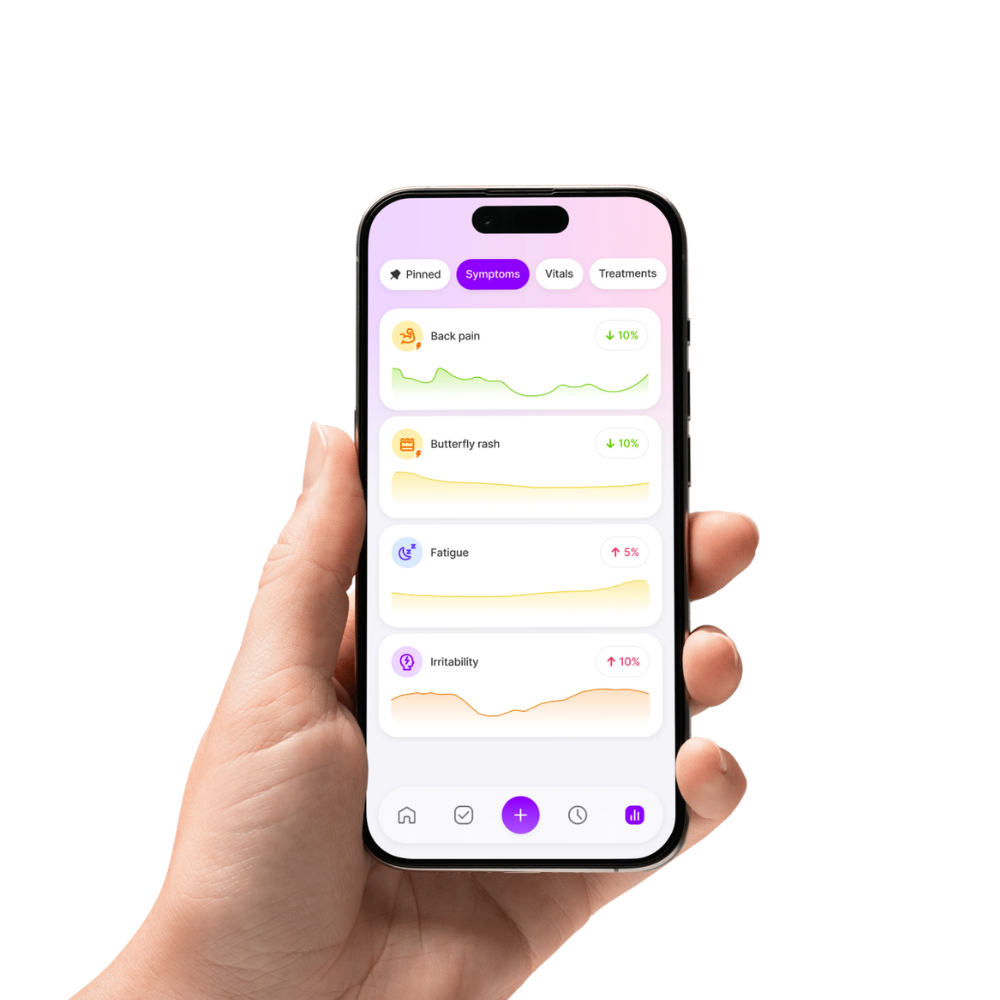
Track what you eat and how you feel in the app
Trying a different way of eating? Track it alongside your symptoms in the Human Health app, so you have a record of what changed and when.


Pro tip
If you make changes to your diet, consider tracking them alongside your symptoms. Keeping a record over time can help you describe what changed and when, and give you useful information to share with your healthcare provider.
Pro tip
You can track a Mediterranean-style diet in the Human Health app alongside your symptoms, helping you keep a record of what you changed and how you felt over time.



