Is there a fibromyalgia test? How diagnosis works

November 18, 2026

- Fibromyalgia is a chronic pain condition that can significantly impact your quality of life.
- There is currently no single test that can confirm you have fibromyalgia, and the diagnosis process can be quite long for some people.
- Doctors diagnose fibromyalgia by assessing your symptoms and medical history using established diagnostic criteria, which consider pain distribution, symptom severity, and duration.
- Creating a health record of your symptoms to share with your doctor can make it easier to advocate for your needs and ensure your concerns are taken seriously.
If you think you may have fibromyalgia, knowing what to do about it can be challenging and overwhelming.
In this article, we explore how fibromyalgia is diagnosed, whether there’s a fibromyalgia test, who can diagnose the condition, and what to expect and prepare for during the diagnostic process.
Let’s get into it.
Is there a fibromyalgia test?
Fibromyalgia is a chronic pain condition that affects 2–4% of the global population. Despite its prevalence, getting diagnosed with fibromyalgia remains challenging and is often a slow process.
There is no single blood test, scan, or other test that can confirm a fibromyalgia diagnosis. Instead, doctors assess your symptoms and medical history using established diagnostic criteria.
They may also recommend tests to investigate other conditions that could explain or contribute to your symptoms.
How doctors diagnose fibromyalgia
Your doctor will usually begin by discussing your symptoms and medical history. They may also recommend tests to investigate other conditions that could be contributing to your symptoms.
The diagnostic criteria for fibromyalgia have changed several times. Some doctors now use the 2016 revised fibromyalgia diagnostic criteria, which involve assessing pain distribution and symptom severity.
Under these criteria, you must meet all three of the following requirements:
The WPI and generalized pain criterion assess where you experience pain, while the SSS measures the severity of other symptoms. Together, they help your doctor determine whether you meet the diagnostic criteria for fibromyalgia.
{{pro-tip-1}}
The widespread pain index
The widespread pain index (WPI) is used to identify locations where you have felt pain over the last week. During the assessment, your doctor will ask whether you have felt pain in 19 areas of your body:
- Shoulder girdles
- Upper arms
- Lower arms
- Hips and buttocks
- Upper legs
- Lower legs
- Jaw
- Chest
- Abdomen
- Neck
- Upper back
- Lower back
Each painful area contributes one point to your WPI score, giving a total between 0 and 19.
The symptom severity scale
The symptom severity scale (SSS) is used to better understand how severe your symptoms have been over the past week.
It uses a four-point scale (0 = no problem, 1 = slight or mild problems, 2 = moderate problems, and 3 = severe problems) to assess three fibromyalgia symptoms:
- Fatigue levels
- Trouble thinking or remembering
- Waking up tired (unrefreshed)
You will also be asked whether you have experienced any of the following symptoms over the past six months, with one point awarded for each:
- Pain, including abdominal cramps
- Depression
- Headache
Your total SSS score can range from 0 to 12.
Is the 18-point fibromyalgia test still used?
The 18-point or tender point test was previously used to diagnose fibromyalgia. It involved applying pressure to nine symmetrical pairs of points on the body to assess tenderness.
This test is now considered outdated and is no longer required for diagnosis.
Research suggests that some of these tender points may overlap with myofascial trigger points, which can mimic fibromyalgia pain when pressed.
Who diagnoses fibromyalgia, and how long does it take?
Some people receive their fibromyalgia diagnosis from their family doctor. Others are referred to specialists, including rheumatologists, neurologists, or pain management specialists.
Diagnosis can be a slow process. One study found that the average time between symptom onset and diagnosis was 6.42 years.
Delays can occur for several reasons, including difficulties recognizing fibromyalgia symptoms and distinguishing them from those of other conditions.
This figure is an average and doesn’t mean your diagnosis will take that long. Keeping a record of your symptoms, including the location, duration and severity of your pain, can help your doctor better understand what you’re experiencing.
How to prepare for your appointment
So you’ve made an appointment to discuss your symptoms with your doctor. Before then, there are a few things you can do to help ensure a smooth, productive appointment.
- Create a symptom journal to track your symptoms (such as pain, fatigue, and brain fog) and their severity. Tracking symptoms over several weeks or months can help reveal patterns, but you don’t need to wait to seek medical advice.
- Ask your family members if they know of anyone in your family with a history of fibromyalgia.
On the day of your appointment, bring the following:
- Your symptom journal
- A complete list of your current medications and supplements
- Copies of any blood work or imaging done to rule out other possible causes
The future of fibromyalgia diagnosis
As researchers continue to explore the underlying causes of fibromyalgia, they are also investigating new fibromyalgia tests and potential biomarkers that could improve diagnosis.
Areas of research include:
- Brain imaging to identify differences in how pain is processed
- Signs of inflammation in the blood and cerebrospinal fluid (the fluid surrounding the brain and spinal cord)
- Changes in hormone regulation and the autonomic nervous system, which controls automatic functions such as heart rate
- Molecular markers that may be associated with fibromyalgia
- Wearable technology that collects ongoing health data
These approaches are still being researched and are not established diagnostic tests for fibromyalgia. However, they may eventually help doctors diagnose the condition more quickly and accurately.
Your symptom history can help with fibromyalgia diagnosis
Fibromyalgia can be difficult to diagnose. There are no straightforward fibromyalgia tests, and symptoms change over time or overlap with those of other conditions.
Keeping a record of your symptoms can help your doctor understand what you’re experiencing and give you clearer information to discuss during appointments.
Using the Human Health app, you can easily track your symptoms such as pain location and severity, fatigue, and sleep quality to build a detailed health record that shows how your symptoms affect your daily life.
You can also take our fibromyalgia FIQR test to better understand how fibromyalgia symptoms affect your day-to-day life. This questionnaire measures symptom impact rather than diagnosing the condition.
{{inline-cta-1}}
Frequently asked questions
Is fibromyalgia an autoimmune disorder?
Fibromyalgia is not currently classified as an autoimmune disorder.
However, some research suggests that autoimmune mechanisms may play a role in the condition, although the evidence is still emerging. The exact causes of fibromyalgia remain unclear.
What types of pain are associated with fibromyalgia?
Fibromyalgia pain affects everyone differently. People with fibromyalgia often experience widespread dull aching pain throughout the body, including the head, arms, chest, abdomen, legs, and spine. The pain lasts for at least three months at a time.
Alongside pain, people with fibromyalgia may experience fatigue, anxiety, depression, and brain fog.
Do other conditions mimic fibromyalgia?
Many other medical conditions can cause symptoms similar to fibromyalgia, including multiple sclerosis (MS) and polymyalgia rheumatica. Fibromyalgia can also be confused with other causes of muscle pain (myalgia).
Because of this symptom overlap, your doctor may order diagnostic tests to investigate whether another condition could explain your symptoms or is occurring alongside fibromyalgia.
Disclaimer: Human Health is a health tracking platform and does not provide medical advice, diagnosis, or treatment. The information in this guide is for educational purposes only and is not a substitute for professional medical care. Always consult your doctor or healthcare provider with questions about your health.
Sources:
- Facts and myths pertaining to fibromyalgia (2018)
- Diagnostic Criteria for Fibromyalgia: Critical Review and Future Perspectives (2020)
- 2016 revised fibromyalgia diagnostic criteria (2016)
- AMERICAN COLLEGE OF RHEUMATOLOGY (ACR) Preliminary Diagnostic Criteria for Fibromyalgia, The American College of Rheumatology
- The Predetermined Sites of Examination for Tender Points in Fibromyalgia Syndrome Are Frequently Associated With Myofascial Trigger Points (2010)
- Fibromyalgia: Diagnosis, Treatment, and Steps to Take, The National Institute of Arthritis and Musculoskeletal and Skin Diseases
- Time to diagnosis of fibromyalgia and factors associated with delayed diagnosis in primary care (2018)
- Moving Toward Objective Diagnosis in Fibromyalgia: Emerging Biomarkers and Digital Phenotyping Tools (2026)
- Is fibromyalgia an autoimmune disorder? (2024)
This is a div block with a Webflow interaction that will be triggered when the heading is in the view.

Learn more

New Treatments for Fibromyalgia in 2025: What’s Working


Magnesium for fibromyalgia: Does it help?

Fibromyalgia Flare Up: Signs, Symptoms, Triggers & Management

Fibromyalgia and muscle spasms: What causes them and how to manage them

Cymbalta for Fibromyalgia: How It Works & What to Expect
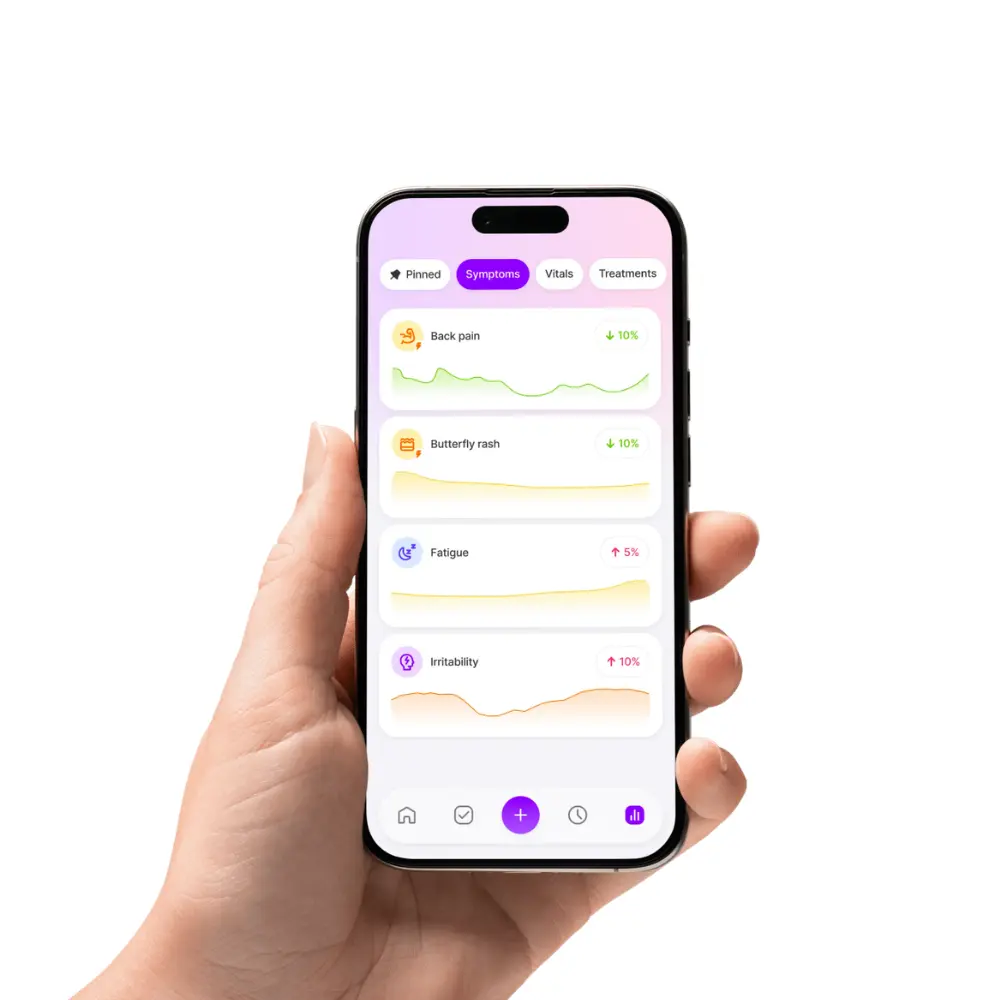
Track your fibromyalgia symptoms with Human Health
Make diagnosis easier by showing up to your appointment with concrete evidence, not vague guesses, about how your pain is affecting your quality of life.


Pro tip
Already been diagnosed with fibromyalgia but want a clearer understanding of how it’s impacting your day-to-day life? Take our fibromyalgia FIQR test to learn more.



