The stages of endometriosis: What your stage means for you

September 15, 2026

- Endometriosis is a chronic condition where tissue similar to the lining of the uterus grows in other areas of the body.
- Endometriosis can be classified into different stages based on factors such as the location, extent, and depth of lesions and the presence of scar tissue or adhesions.
- A lower endometriosis stage doesn’t mean your symptoms should be mild, and a higher stage doesn’t predict how much pain you’ll experience. Your stage is one piece of information about your condition, not a measure of how badly it affects you.
If you have recently been diagnosed with endometriosis, you may have been told which stage of the condition you have. Trying to understand what that means can be overwhelming.
Knowing your stage can be helpful as it gives you and your doctor information about the extent of your endometriosis. But it doesn’t necessarily reflect the symptoms you experience or how much they affect your daily life.
This article explains what the different stages of endometriosis mean, how they’re determined, and what your stage can and can’t tell you about your condition.
Let’s get into it.
Understanding the stages of endometriosis
Endometriosis can increasingly be diagnosed using a combination of your symptoms, physical examinations, and imaging, without the need for surgery. If you have laparoscopic surgery, your surgeon may use the rASRM system to assign your endometriosis a stage based on what they find.
Another system, called #Enzian, provides a more detailed description of the location and extent of endometriosis and can be used with imaging as well as surgery.
What your rASRM endometriosis stage means
If your surgeon uses the rASRM classification system, your endometriosis stage is based on the number of lesions, their location, and whether scar tissue is present.
Based on that information, your surgeon will assign you a number of points that correlates to a score:
{{pro-tip-1}}
What your #Enzian classification means
The #ENZIAN system was created as a tool to supplement the rASRM system by better classifying deep endometriosis. One of the advantages of this system is that it better describes endometriosis affecting the organs and tissues deeper within the pelvis, such as the bowel and urinary tract.
Rather than assigning one overall stage, #Enzian uses a combination of letters and numbers to describe the location and extent of endometriosis. It can also be used to describe findings from imaging, such as ultrasound or MRI, as well as surgery.
For deep endometriosis, the system uses three main areas:
The numbers 1, 2, and 3 are then used to describe the size of lesions in these areas. For A, B, and C, 1 means a lesion is less than 1 cm, 2 means it is 1–3 cm, and 3 means it is larger than 3 cm.
But #Enzian isn’t limited to deep endometriosis. It can also describe:
Some areas are also recorded separately for the left and right sides of the body.
This means your #Enzian classification may look like a string of letters and numbers rather than a single stage. Each part provides information about where endometriosis or related findings have been identified and, where applicable, their extent.
Important note: Don’t worry if your #Enzian classification looks complicated. Ask your doctor to talk you through what each part of the code means and what the findings mean for you.
Your endometriosis stage is a tool, not a verdict
Being diagnosed with endometriosis can be overwhelming, especially if you’ve waited a long time for it. Being assigned a stage can bring up mixed emotions in some people.
A lower stage might feel confusing or invalidating if your symptoms have had a major impact on your life, while a higher stage may sound worrying. However, your stage does not reflect how much pain you experience or how seriously endometriosis affects you.
Some people with stage IV endometriosis have minimal symptoms. Others experience higher pain levels than expected for their endometriosis stage.
In the same way, having a more advanced stage of endometriosis doesn’t mean your condition is necessarily more dangerous or severe.
Your endometriosis score alone doesn’t tell your doctor how the condition affects your daily life or what treatment will work best for you. That’s why it can be helpful to view your score as a data point—a piece of information they can consider alongside your symptoms, their impact on your life, your fertility goals, and other aspects of your health.
Understanding your symptoms alongside your stage
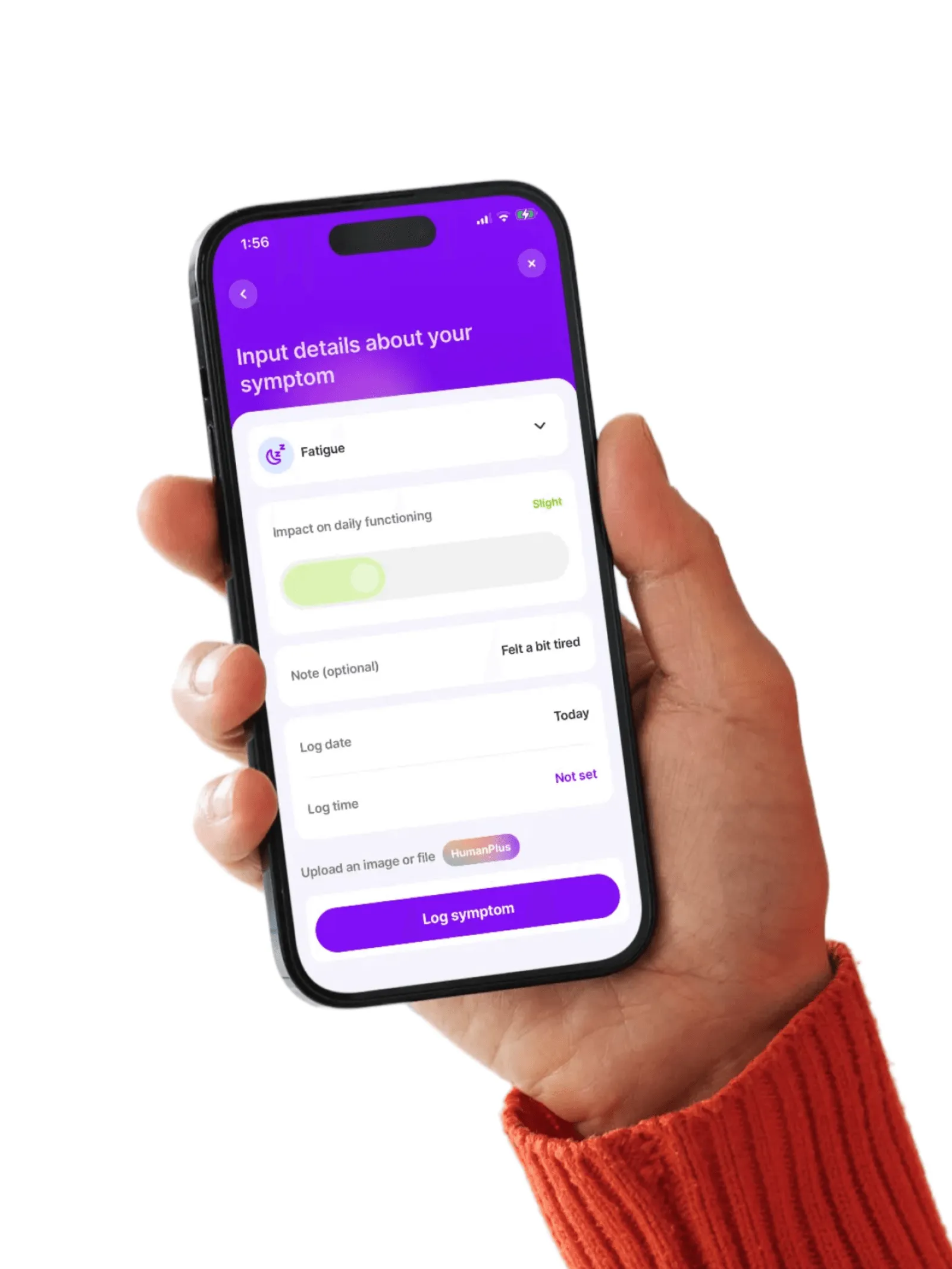
Tracking your symptoms can help you understand what your endometriosis looks like in day-to-day life, beyond what your stage tells you on paper. It also gives you a record you can refer to and share with your doctor.
Using the Human Health app, you can keep track of your symptoms and energy levels alongside your menstrual cycle. The app can turn that information into downloadable PDFs, which are easy to share with your medical team.
{{inline-cta-1}}
Frequently asked questions
How do I know what stage of endometriosis I have?
If you’re referring to the four rASRM stages, your stage is determined during laparoscopic surgery.
During this procedure, your surgeon will explore and assess the extent of endometriosis in your abdominal cavity, and use that information to determine your stage.
Is stage IV endometriosis dangerous?
Stage IV is the most advanced stage in the rASRM classification system, but the number describes the extent of the endometriosis rather than how unwell you are. Some people with stage IV have few symptoms, while others are significantly affected.
Your doctor can explain what the location and extent of your endometriosis mean for your health and whether you need treatment or ongoing monitoring.
Can your endometriosis stage change?
Endometriosis can progress over time, but the four rASRM stages aren’t steps that everyone with the condition progresses through. Having stage I or II endometriosis doesn’t mean you will eventually develop stage III or IV disease.
Disclaimer: Human Health is a health tracking platform and does not provide medical advice, diagnosis, or treatment. The information in this guide is for educational purposes only and is not a substitute for professional medical care. Always consult your doctor or healthcare provider with questions about your health.
Sources:
- Endometriosis, StatPearls (2026)
- What are the symptoms of endometriosis?, Eunice Kennedy Shriver National Institute of Child Health and Human Development
- Classification of endometriosis (2020)
- Classification/staging systems for endometriosis: the state of the art (2020)
- The #Enzian classification: A comprehensive non-invasive and surgical description system for endometriosis (2021)
This is a div block with a Webflow interaction that will be triggered when the heading is in the view.

Learn more

Adenomyosis vs. endometriosis: The key differences you need to know

.webp)
Endometriosis overview: Symptoms, early signs, and what it feels like

Endometriosis flare-ups: Potential triggers and how long they last

The endometriosis diet: What the research says and why your experience matters

Endometriosis pain locations: Where it hurts and why
Understand your endometriosis beyond the stage
Track your symptoms with Human Health to build a clearer picture of how endometriosis affects you day to day.


Pro tip
Don’t be discouraged if your stage sounds “mild” but your symptoms don’t feel that way. The rASRM stage describes the extent of endometriosis found during surgery, not how much pain you should be experiencing.
.png)


